How AI Search Agents Choose Which Business to Recommend
AI search agents like ChatGPT cite only 1.2% of local businesses. Learn exactly what signals they use to decide who gets recommended — and how to make sure it's you.
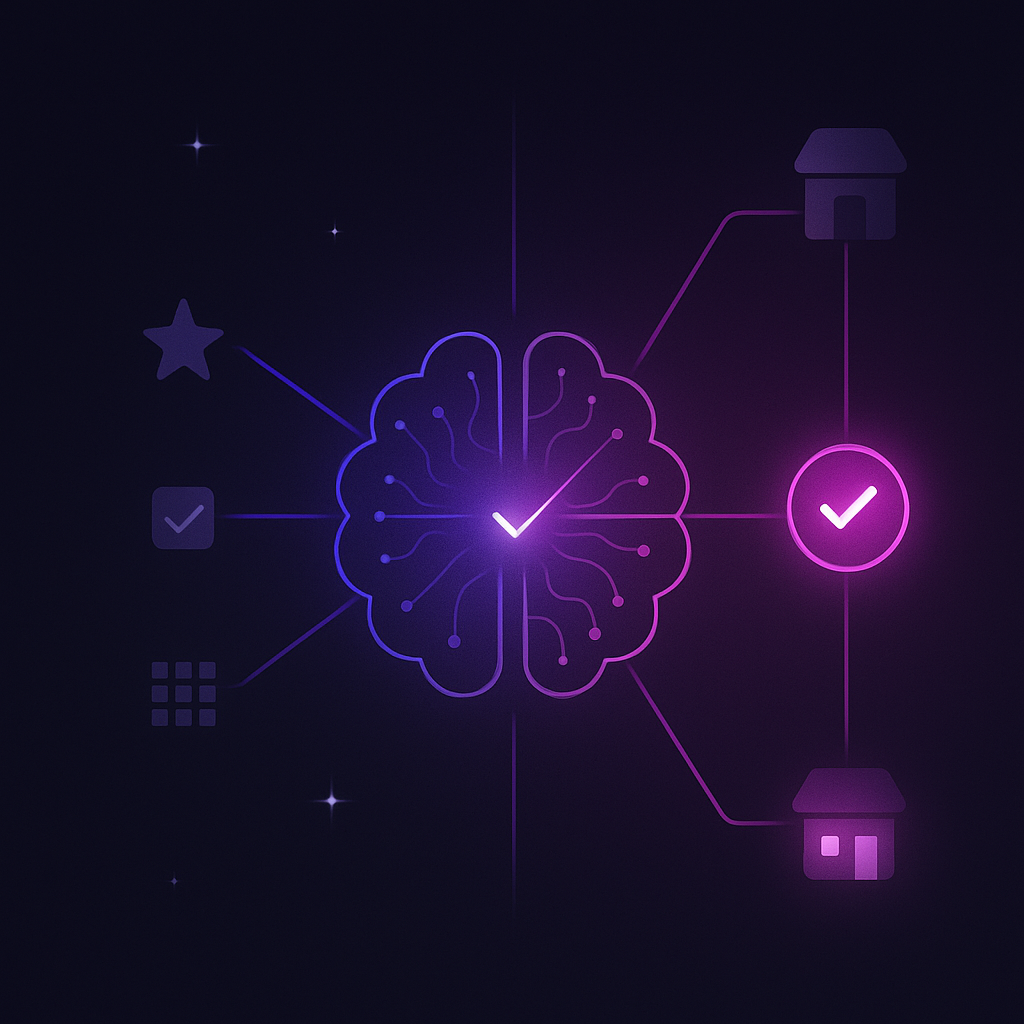
When someone asks ChatGPT 'who's the best-rated HVAC company in Sandy Springs,' it doesn't flip through a phone book. It doesn't crawl Google in real time. It makes a recommendation based on a model of your business it's built from every piece of data it's ever encountered about you. And here's the thing: it only cites about 1.2% of businesses. One point two percent. The other 98.8% don't even exist as far as the AI is concerned.
Understanding how AI agents make that decision isn't guesswork. The signals are knowable, measurable, and actionable. This article breaks down exactly what they are, why they matter, and what you can do to make sure your business is in that 1.2%.
This is the next frontier of local search — and it's operating on a completely different set of rules than traditional SEO.
The 1.2% Problem: Why So Few Businesses Get Cited
SOCi research has shown that AI is approximately 30 times more selective than traditional Google search. Google shows 10 blue links and a local 3-pack — that's 13 opportunities to be seen. AI agents like ChatGPT typically cite 1 to 3 businesses per query, and often just one. If you're not the top recommendation, you're invisible.
Why are AI agents so selective? Because their job isn't to give you options. Their job is to give you the answer. When someone asks for a recommendation, the AI is trying to be right, not comprehensive. It would rather cite one business it's confident about than three it's uncertain about.
This means the bar for being cited is higher than the bar for ranking on page one of Google. Traditional SEO can get you visible with decent optimization. GEO — the practice of optimizing for AI-generated responses — requires excellence across multiple signals simultaneously.
- AI agents cite 1-3 businesses per query vs. Google's 13+ organic results
- AI prioritizes confidence over comprehensiveness — it would rather be right than show options
- The bar for AI citation is significantly higher than traditional search ranking
Signal 1: Google Business Profile — Your AI Storefront
Google confirmed in 2026 that Google Business Profile is now an 'AI data feed' powering Gemini, Search, and Maps. This means your GBP isn't just where customers find your hours and phone number. It's the primary data source AI agents use to understand what your business is, where it's located, what you offer, and whether you're active and legitimate.
A complete GBP signals to AI that your business is real and operational. Missing categories? The AI doesn't know what you do. No recent photos? The AI assumes you're inactive. Unanswered Q&A? The AI sees a business that doesn't engage with customers. Every incomplete field is a missed opportunity to feed the AI accurate data about your business.
Beyond completeness, activity matters. Weekly Google Posts, new photo uploads, and regular Q&A responses signal that your business is alive and engaged. AI agents interpret this activity as relevance — an active business is more likely to be a good recommendation than a dormant one.
Signal 2: Reviews — Recency Beats Volume
Here's a stat that changes how you should think about reviews: 74% of consumers only trust reviews from the past 3 months. AI agents are following the same pattern. They weight review recency more heavily than review volume. A business with 20 reviews from the last 3 months will get cited over a business with 200 reviews from 2 years ago.
This is a fundamental shift from the old SEO wisdom of 'get as many reviews as possible.' Volume still matters, but recency is the tiebreaker. The AI wants to recommend businesses that are currently delivering good experiences, not businesses that were great two years ago but have been quiet since.
Review diversity also matters. AI agents pull review data from multiple platforms — Google, Yelp, Facebook, industry-specific sites. If your reviews are concentrated on one platform and nonexistent on others, the AI has an incomplete picture. And incomplete pictures don't earn citations.
- 74% of consumers only value reviews from the last 3 months
- Recency outweighs volume — 20 recent reviews beat 200 old ones
- Multi-platform review presence gives AI a more complete picture of your business
Signals 3 & 4: Citation Consistency and Structured Data
AI agents cross-reference your business information across dozens of sources — Google, Yelp, Apple Maps, Facebook, industry directories, your website. If your business name is 'ABC Plumbing LLC' on Google but 'ABC Plumbing' on Yelp and 'A B C Plumbing Co' on Facebook, the AI sees three different businesses, not one. That inconsistency erodes confidence.
Citation consistency — making sure your name, address, and phone number are letter-for-letter identical everywhere — is the single highest-impact fix most businesses can make. AI agents don't forgive minor variations the way traditional search algorithms do. 'Suite 100' vs. 'Ste. 100' vs. '#100' — these all read as different addresses to an AI.
Structured data, or schema markup, is the second piece of this puzzle. Schema is code you add to your website that tells AI agents explicitly what your business is, where it's located, what services you offer, and who you serve. Think of it as handing the AI a fact sheet about your business — no interpretation required. LocalBusiness schema, FAQ schema, and Organization schema are the three most important types for local businesses.
Signal 5: Third-Party Mentions — Being Talked About
The most overlooked signal in AI agent recommendations: third-party mentions. When other websites — news outlets, industry blogs, chamber of commerce directories, supplier websites — mention your business by name, AI agents register those mentions as independent confirmations that your business is real, relevant, and trusted.
This is different from backlinks. Traditional SEO values backlinks for their authority and relevance to your keywords. AI agents value third-party mentions as existence proofs — each independent source that mentions your business reinforces the AI's confidence that your business is what it claims to be.
The practical takeaway: get mentioned. Join your local chamber of commerce. Sponsor a little league team and get listed on their sponsors page. Offer to be a source for a local news story. Get listed in your suppliers' dealer directories. Every mention is a data point that pushes you closer to that 1.2%.
The Agent-Ready Checklist: 5 Steps to Get Cited
The businesses getting cited by AI agents aren't bigger than you or better than you. They're just more visible to the machines. Here's the checklist to become agent-ready.
- 1. Complete your Google Business Profile. Every category, every attribute, every service area. Post weekly. Upload photos monthly. Answer every Q&A within 24 hours.
- 2. Build a review engine. Set up an automated system that asks every happy customer for a review, every time. Target 3-5 new reviews per week. Respond to every review — positive and negative — within 48 hours.
- 3. Audit and fix your citations. Check your NAP across Google, Yelp, Apple Maps, Facebook, BBB, and any industry-specific directories. Every listing must be identical.
- 4. Add schema markup to your website. LocalBusiness schema, FAQ schema, and Organization schema are non-negotiable. If you use a platform like WordPress or Shopify, there are plugins that handle this. If you have a custom site, get a developer to add it.
- 5. Generate third-party mentions. Join your chamber of commerce. Get listed in supplier directories. Sponsor local events. Offer quotes for local news stories. Every independent mention is an AI trust signal.
Want help implementing this?
Get my free snapshot tailored to your business.
Frequently Asked Questions
How do I know if my business is being cited by AI agents?+
Open ChatGPT, Gemini, or Perplexity and ask: 'What's the best [your service] in [your city]?' Run this test for your core services and nearby cities. Try different phrasings. Do this monthly. If your business doesn't appear, audit the five signals described in this article — one of them is likely weak.
How long does it take to become agent-ready?+
Filling out your Google Business Profile and adding schema markup to your website can be done in an afternoon. Building review velocity and citation consistency takes ongoing effort — expect 30-60 days to build a strong signal. Third-party mentions are a long game. The key is starting now, because every month you wait is a month your competitors are building their AI presence.
Do I need different strategies for different AI agents?+
No — the core signals are the same across ChatGPT, Gemini, Perplexity, and Claude. All of them pull from your Google Business Profile, reviews, citations, and website data. Optimizing for one generally optimizes for all. The main platform-specific consideration is Apple Business Connect for Siri, and Bing Places for Alexa.